- Home
- Products
- Medical Waste Autoclave Shredder
- Medical Waste Autoclave
- Medical Waste Shredder
- Tire Tyre Shredder
- Waste Wood Shredder
- Plastic Lump Purge Shredder
- Paper And Cardboard Shredder
- Large Diameter HDPE Pipe Shredder
- Double Single Shaft Shredder
- Cable Wire Shredder
- Woven Bag Shredder
- Scrap Metal Shredder
- Shredder Crusher Machine
- Single Shaft Shredder
- Double Shaft Shredder
- Plastic Film Shredder
- Textile Fabric Cloth Shredder
- Pallet Shredder
- Biomass Shredder Machine
- Scrap Metal Shredder
- Four Shaft Shredder
- Shredder Blades
- Plastic Accessory Machinery
- Solution
- PP PE Film Recycling Machine
- Plastic Pallet Recycling
- Aluminum Plastic Recycling
- PVC Pipe Recycling
- PET Bottle Recycling
- Fabric Textile Recycling
- Wood Pallet Recycling
- Wood Recycling Machine
- PP Woven Bag Recycling
- Medical Waste Recycling
- Tire Recycling Shredder
- Bulky Waste Recycling
- Hazardous Waste Treatment
- Waste PVC Recycling
- Fiberglass Shredding Recycling
- PCB Recycling
- Carpet Recycling
- Foam Recycling Shredder
- Cable Recycling Plant
- Radiator Recycling Machine
- IBC Recycling
- Car Bumper Recycling
- RDF Recycling System
- Food Waste Disposal Machine
- Plastic Rotational Molding Water Tank Recycling
- Rice Straw Shredder Recycling Machine
- Applications
- PET Plastic Bottle Plastic Container
- Plastic Bucket Drum Barrel
- Industrial Agricultural Plastic Film
- PVC WPC SPC Plastic Floor
- Plastic Furniture / Plastic Chair
- Plastic Lump Purges
- Plastic Pallet / Plastic Tray
- PVC HDPE PPR Plastic Pipe
- Computer TV Refrigerator Shell
- PVC Fiber Reinforced Hose
- Woven Bag Jumbo Raffia Bag
- EPS PS PUR PVC PE PF Foam
- CD & DVD
- Waste Sponge
- Tire Tyre
- Coconut Husk/ Shell
- Wood Pallet/Tray/Timber
- Medical Waste
- Animal Bone
- Organic Waste
- Vehicle Bumper
- Video
- About Us
- News
- Contact Us
- 20 years focusing on recycling

Location
Zhangjiagang City, Jiangsu Province, China.
Email address
Phone
+86-512-58810860


Low-Quality Plastic Shredder Pulper Ropes Shredder
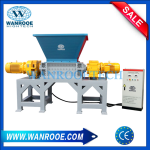
The Pulper Ropes Shredder is a dual-shaft low-speed high-torque shredding equipment specifically designed for “metal-plastic composite entangled waste. It shreds meter-long pulper ropes into 5-10 cm short segments or fragments, creating favorable conditions for subsequent purification processes such as magnetic separation (to separate metals) and air separation (to separate plastics), ultimately enabling efficient recycling of both metals and plastics.
 Inquire
Inquire
XLow-Quality Plastic Shredder Pulper Ropes Shredder Description:
Pulper ropes (braided composite waste formed by intertwined metal wires, such as iron wires, and plastic films) present a key challenge due to their long, rope-like structure with tight entanglement of metals and plastics. Manual handling is inefficient and prone to causing equipment jams. The Pulper Ropes Shredder, a specialized device distinct from general-purpose equipment like the Low-Quality Plastic Shredder, plays a core role in mechanically breaking down this entangled structure. It shreds meter-long pulper ropes into 5-10 cm short segments or fragments, creating favorable conditions for subsequent purification processes such as magnetic separation (to separate metals) and air separation (to separate plastics), ultimately enabling efficient recycling of both metals and plastics.

Working Principle:
The dual shafts rotate at low speeds (typically 10-30 rpm) in opposite directions. Through the interlocking of the cutters, the fed pulper ropes are forcibly “cut off” (for metal wires) and “torn apart” (for plastic films), reducing the long rope-like materials into uniform short segments (length adjustable via cutter spacing). The physical properties of metals and plastics remain unchanged during shredding, facilitating subsequent separation.
Structural Design:
Adopts a dual-shaft counter-rotating roller layout, with high-strength alloy cutters (e.g., high-carbon steel) arranged alternately on the shafts. The cutter edges are serrated or sharpened to achieve simultaneous shearing, tearing, and extrusion. The machine body is equipped with anti-winding guard plates to prevent metal wires from wrapping around the shafts.
Application:
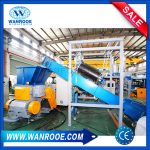
Primarily used for centralized processing of pulper ropes at pulp mill slag discharge ports or waste paper bale dismantling areas. Its processing capacity can be customized according to mill scale (1-5 tons/hour for small models, 10-30 tons/hour for large models), and it can be integrated with conveyor belts, magnetic separators, etc., to form an automated recycling line.
Low-Quality Plastic Shredder Pulper Ropes Shredder Advantages:
1.Strong targeting, efficiently solving metal-plastic entanglement issues, preventing equipment jamming, with a shredding success rate over 95%.
2.Enhances subsequent recycling efficiency, increasing metal recovery rate by 10%-15% and plastic purity to over 90%.
3.Replaces manual labor, reducing labor and maintenance costs (maintenance costs cut by 30%+), with overload protection ensuring safety.
4.Adapts to pulper ropes with varying entanglement densities, operates in a closed system with dust removal, meeting environmental standards.
Leave a Reply
| Model | Shredder Motor Power | Shredding Chamber Size |
| PNSS-300 | 5.5 | 510×300 |
| PNSS-400 | 7.5 | 510×400 |
| PNSS-600 | 7.5+7.5 | 510×600 |
| PNSS-800 | 11+11 | 600×800 |
| PNSS-1000 | 18.5+18.5 | 800×1000 |
| PNSS-1200 | 30+30/22+22 | 1000×1200 |
| PNSS-1400 | 45+45 | 1400×1200 |
| PNSS-1600 | 55+55 | 1600×1200 |
| PNSS-1800 | 75+75 | 1800×1400 |
| PNSS-2000 | 90+90 | 2000×1400 |





Leave a Reply